Bioengineering01
Pilot scale-up failure review
Challenge the assumptions that could turn a successful bench process into a failed pilot.
Climate technology. Scientific red teaming.
James Scott’s Envirotech Accelerator applies KRYOS Hypercube to the decisions climate-tech labs face before a pilot, product, or carbon-removal purchase.
Carbon removal · Climate biotech · Industrial bioprocesses
Conceptual visualization. No experimental data.
From possibility to proof
A carbon-capture result can look compelling until energy demand, material lifetime, or carbon fate changes the conclusion. A biological system can work at the bench and fail in a larger reactor.
Each review links the scientific claim to process limits, cost, climate impact, and the next decision. The lab receives a traceable evidence record, ranked failure risks, and a test plan with advance or stop criteria.
Find your research areaStart with a consequential question
Challenge the assumptions that could turn a successful bench process into a failed pilot.
Find the combinations of yield, energy, lifetime, and selling price that make a process viable or rule it out.
Challenge a supplier’s technical evidence before a carbon buyer or funding partner does.
Design measurement, reporting, and verification (MRV) around the uncertainties that matter and the cost to resolve them.
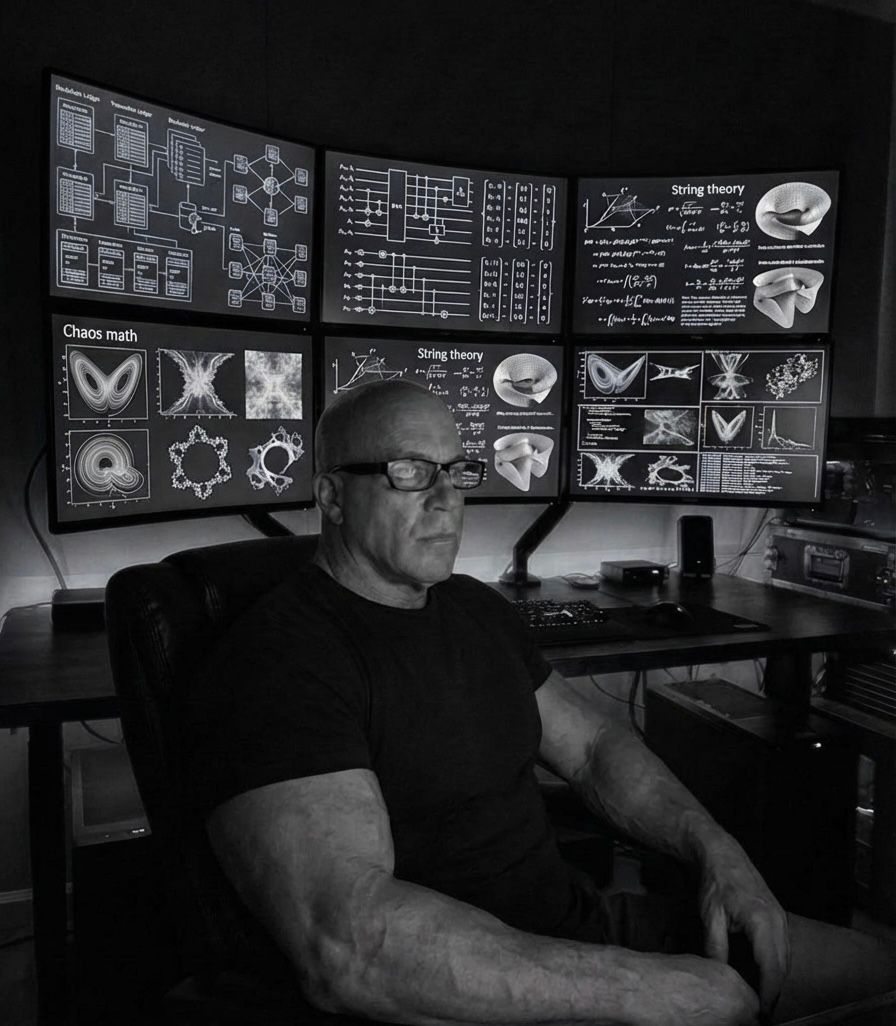
The founder / Envirotech Accelerator
James Scott is a technologist, systems architect, and philanthropist, and the founder of Envirotech Accelerator and Embassy Row Project.
At Envirotech, that perspective connects the scientific result to the process, the climate claim, and the next decision.
Meet James ScottA more demanding standard
We examine the result alongside the alternatives. The outcome may be a stronger claim, a narrower claim, or a reason to change direction.
Inside the research method ↗What was measured, under which conditions?
What else could produce this result?
Where do scale, cost, and climate claims change?
What test would change the decision?
Sequence illustration, not a running analysis.
Capture is a step.
Removal is a whole-system claim.
A research brief, made concrete
A worked enzyme-capture example shows the input packet, evidence gaps, decision gates, and next-experiment plan. An interactive carbon balance makes the boundary visible.
Explore the exampleA focused place to begin
Start with a bounded research decision, the evidence you have, and the result you need to trust.
Scope a research pilot